
Honeybees in Tillsonburg: Swarms and Structural Removal
Honeybees are pollinators worth protecting. For a swarm, call a local beekeeper first. If bees are living inside a wall or soffit and a beekeeper can’t help, Tillsonburg Pest and Wildlife can remove them. Structural honeybee removal starts at $500 plus HST. Call (226) 641-6305.
Honeybees Are Pollinators
Honeybees help pollinate fruit, vegetables, flowers and many of the crops grown in Ontario. They face pressure from pests, disease and loss of habitat, so they’re worth protecting.
That’s why we don’t treat honeybees like an ordinary pest problem. Honeybees shouldn’t be exterminated when a beekeeper can collect them, so our first advice is always to call a local beekeeper.
How a Honeybee Colony Works
One colony, one queen
A colony can hold thousands of bees. The queen lays the eggs, and the worker bees, all female, gather nectar and pollen and look after the hive.
Wax comb and honey
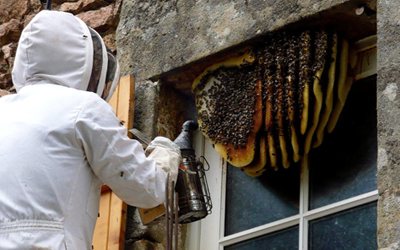
Honeybees live in sheltered hollow spaces, such as tree cavities or sometimes wall voids. They build sheets of wax comb to raise their young and store honey.
Swarming
Around Tillsonburg, most swarms show up in May and June, when a busy colony splits. The old queen leaves with a large group of bees to look for a new home.
Found a Swarm?
A swarm is a cluster of bees hanging from a branch, fence or eave. It can look alarming, but swarming bees have no home to defend yet, so they’re usually calm. Most swarms rest for a few hours to a couple of days while scout bees look for a new home, then move on.
Keep people and pets back, don’t spray or disturb the bees, and call a local beekeeper. Many beekeepers will collect a swarm they can reach easily. The Ontario Beekeepers’ Association has a page to help you find one: Found a Swarm of Honey Bees?
Honeybee or wasp?
- Honeybees: fuzzy and golden-brown, build wax comb, usually calm away from the hive, busy visiting flowers.
- Wasps and hornets: smooth and shiny, bright yellow-and-black or black-and-white, build grey paper nests, often found around food and garbage in late summer.
- Bumblebees: big, round and fuzzy, with small nests often in the ground. They're pollinators too.
Think it’s wasps or hornets? See wasp and hornet removal.
Call a Beekeeper First
1. Call a local beekeeper
Swarms and exposed hives usually go to a beekeeper. Many will collect a swarm they can reach easily.
2. Bees inside a structure?
If they're living inside a wall, soffit, roof or chimney, ask the beekeeper whether they do structural removals, sometimes called cut-outs.
3. If a beekeeper can't help, call us
We can help with honeybees inside a structure. Structural honeybee removal starts at $500 plus HST.
Honeybees Inside a Wall or Soffit
Sometimes honeybees move into a wall, soffit or roof, and a beekeeper isn’t able to reach them or take on the job. An established colony can leave wax comb and honey inside the wall, which may attract other insects.
If a beekeeper can’t help, we can. We’ll inspect, explain the options for your building and give you a price before any work starts.
- Structural honeybee removal starts at $500 plus HST.
- The final price depends on where the bees are, how big the colony is and how hard it is to reach.
- An inspection is required for an exact quote.
- We'll explain what's involved, including any opening up or closing up of the area, before work begins.
Frequently Asked Questions
Do you exterminate honeybees?
Honeybees are pollinators, and our first advice is always to call a local beekeeper. Swarms and exposed hives usually go to a beekeeper. We only help with honeybees living inside a structure, such as a wall or soffit, when a beekeeper can’t, and we’ll talk you through the options first.
Is a honeybee swarm dangerous?
Swarming honeybees have no home to defend yet, so they’re usually calm. Any bee can sting if it’s handled or disturbed, so keep people and pets back, don’t spray the bees, and call a beekeeper. Most swarms move on within a few hours to a couple of days.
When do honeybees swarm around Tillsonburg?
Swarms are most common in May and June, when busy colonies split and the old queen leaves with part of the colony to find a new home.
How do I know if honeybees are inside my wall?
You’ll usually see a steady stream of bees going in and out of the same small gap in the siding, soffit, a vent or the roofline, all day long. Sometimes you can hear a hum inside the wall.
How much does structural honeybee removal cost?
Structural honeybee removal starts at $500 plus HST. The final price depends on where the bees are, how big the colony is and how hard it is to reach. An inspection is required for an exact quote, and we’ll give you a price before any work starts.
Honeybees Inside a Wall and No Beekeeper Available? Call Us
Call for a free phone estimate. An inspection is required for an exact quote.